Minecraft Forge vs Fabric – Which Should You Choose?
Make Your Own Minecraft Server
Your own Minecraft server is only 5 minutes away! We support simple one click install for over 3298 unique modpacks.
Minecraft Server Hosting
If you’ve ever tried modding Minecraft, you’ve probably hit that moment of panic: “Wait… do I use Forge or Fabric?” It’s one of the first decisions you have to make, and honestly, it can be confusing as heck. The thing is, both options are great—but they’re built for different kinds of players. Whether you’re building a giant factory-powered survival empire or just want a better-looking map, choosing the right modding platform makes a big difference.
So let’s break it all down, nice and easy. This guide will help you figure out what Minecraft Forge and Minecraft Fabric actually do, how they’re different, and which one you should pick for your next modded adventure.
But before you continue, don’t forget to get your Minecraft server hosting set up!
What Is Forge and Fabric?
Make Your Own Minecraft Server
Your own Minecraft server is only 5 minutes away! We support simple one click install for over 3298 unique modpacks.
Start Your Minecraft Server Today!
Forge and Fabric are modding APIs. That’s just a fancy way of saying they’re frameworks that help mods work with Minecraft. Mods on their own can’t do much—they need a modding platform to hook into the game, and that’s where these two come in.
Forge is the OG. It’s been around forever, has a massive community, and supports some of the biggest modpacks in Minecraft history. Fabric, on the other hand, is the scrappy newcomer. It’s lighter, faster, and always quick to update when new Minecraft versions drop.
They both help you run mods, but the way they do it? Totally different vibes.
Why People Love Forge
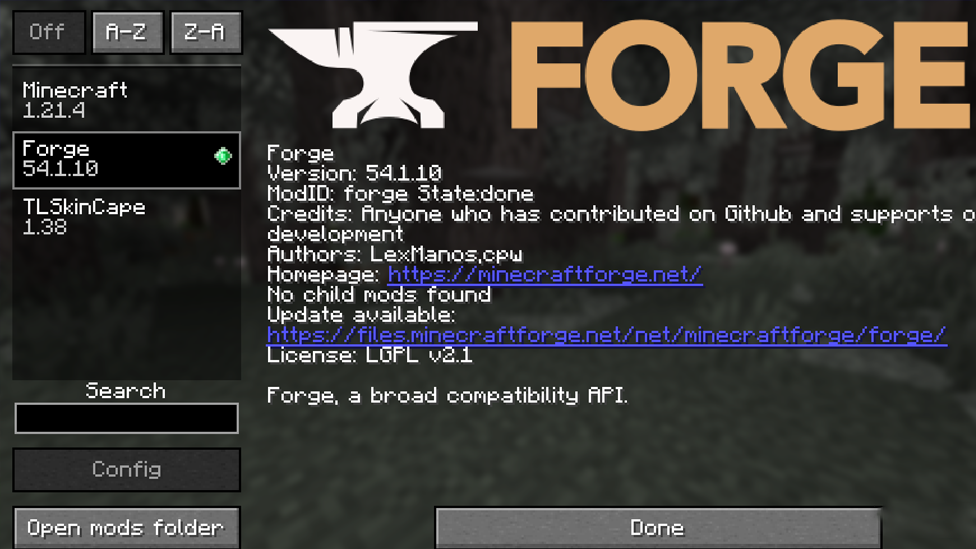
Let’s talk about Forge first. This one’s the heavy hitter. If you’ve ever played RLCraft, All The Mods, or Pixelmon, you’ve used Forge. It’s designed to support big, chunky modpacks—think hundreds of mods all working together, adding everything from new biomes to custom mobs to crazy automation systems.
Forge is built to let modders go wild. It supports deep-level code changes, meaning you can basically rebuild the entire game if you want. That’s why so many full-featured mods are Forge-only.
Another bonus? It’s been around forever, so it has a huge library of mods. Some of the classics like Tinkers’ Construct, Thermal Expansion, and IndustrialCraft are Forge exclusives.
Why People Love Fabric
Now let’s look at Fabric. It’s the lightweight option. It doesn’t try to do everything, it just does what it does really well.
Fabric’s main strengths are speed and simplicity. It’s super fast to load, less likely to break, and usually the first to support new Minecraft versions. If you love staying on the latest updates or messing around with snapshots, Fabric is your best friend.
It’s also amazing for client-side mods—stuff like minimaps, FPS boosters, zoom features, and UI tweaks. And because it doesn’t mess with the game’s core code as much, it’s way less likely to explode in your face with conflicts.
Forge vs Fabric: Side-by-Side
Let’s compare these two side-by-side:
- Mod Size: Forge = big chunky modpacks. Fabric = smaller, more focused mods.
- Updates: Fabric updates crazy fast. Forge takes its time.
- Compatibility: Forge has more classic mods. Fabric is growing fast but still missing some big ones.
- Performance: Fabric is lighter and generally runs smoother.
- Customization: Forge lets you go full Frankenstein with your game. Fabric is more chill. Important note: you can’t mix and match mods between them. Forge mods won’t run on Fabric, and vice versa. You’ve gotta commit to one or the other when setting up your modded world.
When to Use Each One
So here’s the TL;DR on when you should use each:
- Pick Forge if: you want a super complex experience, like a full-blown tech tree, magic systems, new dimensions, or all of the above. It’s ideal for big-time modpacks and long-term playthroughs.
- Pick Fabric if: you want a lightweight setup, fast updates, or just a few quality-of-life mods. It’s great for casual players, performance lovers, or anyone who likes keeping things vanilla-ish with a twist. Either way, both options are totally valid. It just depends on how extra you want your Minecraft to be.
Running Your Server with ScalaCube
Alright, so you picked Forge or Fabric. Now what?
Well, if you’re planning to host your own Minecraft modded server, you’re gonna want a host that doesn’t make your life miserable and ScalaCube is one of the smoothest options out there. No matter which modding API you roll with, ScalaCube’s got your back.
Setup is easy, switching between Forge and Fabric is super simple, and they handle all the heavy lifting like backups, updates, and keeping things stable when you pile on a bunch of mods. Whether you’re running a full Forge pack with 150+ mods or just a few Fabric performance boosters, the servers hold up really well.
You also get a control panel that’s clean and easy to navigate, which is a lifesaver if you’re not a tech wizard. Basically, if you want to focus on building cool stuff instead of troubleshooting crashes, ScalaCube’s a solid move.
FAQs
Can I use Forge and Fabric at the same time?
Nah, sorry. They’re not compatible. You’ve gotta pick one. Some mods are available for both, though, so check before you install.
Which is better for performance, Forge or Fabric?
Fabric usually runs smoother and loads faster. Forge is heavier, but necessary for some big mods.
Do they support the same mods?
Not really. Some mods are made for both, but a lot are exclusive to one or the other. Always double-check mod compatibility.
Which one updates faster after Minecraft updates?
Fabric, hands down. Forge takes longer because it’s more complex.
Can I switch from one to the other mid-game?
Not easily. You’d need to reinstall your mods and potentially start a new world. So it’s best to decide upfront.
Conclusion
Forge is your go-to if you want big, feature-packed modpacks with tons of content. Fabric is perfect if you’re after something lightweight, fast, and more vanilla-friendly.
Neither is “better”—it just depends on how you like to play. Once you’ve picked your path, setting up your world (and your server) is a breeze.
Just mod smart, have fun, and maybe give ScalaCube a try if you want the smoothest ride.
Make Your Own Minecraft Server
Your own Minecraft server is only 5 minutes away! We support simple one click install for over 3298 unique modpacks.
Start Your Minecraft Server Today!