Level Scaling Explained in Oblivion Remastered
With all the graphical overhauls, balance changes, and QoL items Oblivion Remastered brings to Cyrodiil, however, not every aspect of the original has been redesigned. Combat can be optimized more for players today, skill systems more extensive, and progression systems revamped, but one system is as recognizable and divisive as it ever was: level scaling. In Oblivion Remastered, level scaling continues to be at the forefront of controlling how enemies, loot, and encounters level up alongside you as you level. The system keeps you in balance and challenged for the duration of the whole game, wherever and whenever you go. But for anyone other than the most experienced old-guard adventurers, an understanding of where this new interpretation of level scaling Oblivion Remastered sits.
A Legacy of Scaling
Make Your Own game Server
The Elder Scrolls has stretched and proved difficult for progression from day one. Morrowind employed static difficulty; enemies and loot were set by hand and did not adjust regardless of your level, while Skyrim began to become ambitious, associating a great number of monsters and loot with "level bands." But Oblivion level scaling has always been something different: a system that will adjust the world to scale up (or down) to the abilities of your character at a given time. When Oblivion first shipped, players were surprised by antiquated power curves. Instead of low-level baddies staying pencil-thin for the remainder of all time, wolves, bandits, and marauders grew up along with you, swapping leather armor for glass or daedric as you rose in level. In Oblivion Remastered, the same holds true, but with restraint that makes it less merciless and more realistic.
How Level Scaling Works in Oblivion Remastered
The Oblivion Remastered level scaling mode ensures that almost all of the content in the world of the game, from enemies and loot to some of the minigames, scales with your currently engaged character level in real-time. If you're playing the game like a noob, you can waltz into a cave and find a group of tattered bandits with iron daggers and fur armor. Back to that same cave, twenty levels down the road, and the same bandits are going to be elite marauders with magic swords and plate armor.
Enemies don't only scale. Containers, treasure chests, and other loot containers scale to player level as well. That small wooden chest at level 1 may hold a handful of gold coins and a low-strength potion. The same chest at level 20 will contain a wonderful healing potion, a good gem, or even a great enchanted sword. It is set up so that it keeps the player in a state of reward as they advance, so old dungeons are still rewarding after many hundreds of hours of play.
It's also worth noting that Oblivion Remastered level scaling affects more than fight encounters. The lockpicking mini-game, for example, will provide more difficult locks at higher levels, correlating with your rising skill but also tension and difficulty. Even persuasion and speech-style interactions quietly scale in difficulty so that dialogue checks are still appropriate over time.
Modern Adjustments to a Classic System
One of the better advancements over vanilla game level scaling and Oblivion Remastered is that you actually level. In vanilla Oblivion, character progression was based solely on Major Skills, i.e., you could easily get way ahead of your fight levels by leveling the wrong skills, and the game is utterly cruel. Oblivion Remastered fixes this very old bug by making both Major and Minor Skills get cumulative experience gain.
This seemingly innocent tweak has a dramatic impact. Any player can now sightsee, craft, sneak, or play any gamist playstyle they desire without penalty to the difficulty curve. It also makes Oblivion's level scaling system seem that much more fluid and natural, as progress is tied to actual play rather than level-grinding contraptions.
The second improvement is in loot and enemy diversity. In the original, certain creatures or equipment sets would not spawn until analogous level challenges had been conquered, and thus would encounter each other repeatedly. Through Oblivion Remastered, spawn tables are greater in size and randomized. You may be encountering a challenging foe sooner than you anticipate, or discovering an unexpected drop before the "expected" level range. Exploration is thus new and encourages daring.
The Psychology of Scaling
Level scaling in RPGs is a bizarre paradox for the mass gamer. It makes every fight tough and satisfying on one level. And on another level, it makes advancement feel unrealistic; no matter how much power you accumulate, the world's always going to seem like it's rising to power with you.
This equilibrium lies at the very center of how level scaling Oblivion Remastered was remastered. The developers have calibrated the enemy level-up rate compared to the player in such a manner that low-level creatures are not artificially invincible, yet neither are high-level creatures easily dispatched. The result is a system that rewards players for optimizing their gear, spells, and playstyle without adding to the game an element of unfair difficulty.
As opposed to keeping you always under-levelled, scaling nowadays actually encourages discovery. As your character gets more advanced, you receive access to more potent spells, more complex combat skills, and heavy armor, rendering it easier for you to slay mobs even when their level in actuality matches yours. It is no longer merely a matter of raw numbers, but of proficiency as well as building synergy.
How Equipment Scales in Oblivion Remastered
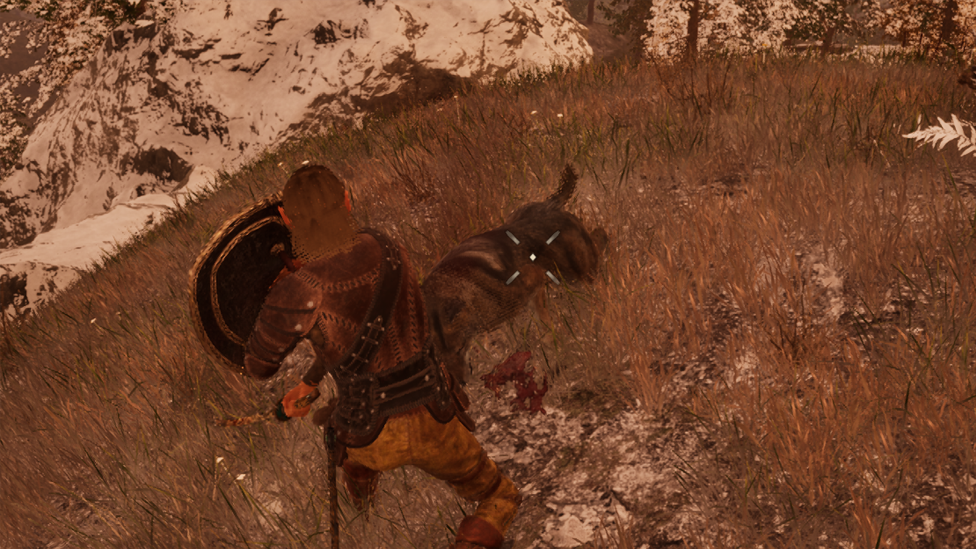
Oblivion Remastered scaling equipment still operates on the same "level bands." A band is a group of levels, generally three or four, where things share the same general stats and enchantments. When outside the band, higher versions begin to pop up in the world naturally. For instance, a piece like Umbra would deal 10 damage when it is picked up on level 1, but closer to 16 when it is picked up on level 15. Similarly, a weapon like Shadowhunt will deal negligible Health and Magicka damage when obtained towards the beginning of the game, but its damage is drastically increased when obtained further along.
These step progression steps gave the Oblivion level scaling system victory. It is fun to play through and wait out of sequence without disrupting balance for players who want to finish quests out of sequence. Scaling has been used for gear, enchanted weapons, armor modifiers, and even potion strength, so no matter how you play, game rewards always match up with your character.
A Comparison to Other Elder Scrolls Titles
Compared to its predecessors, Oblivion Remastered is still the most rampantly scaling installment within the series. Morrowind is a static world, which was unfriendly to new characters but very rewarding to those who were powerful. Skyrim used wider bands of scaling that mitigated extremes but occasionally disrupted immersion with its capability for spawning hugely overpowered enemies in low-level areas.
Level scaling Oblivion Remastered accomplishes the perfect middle ground. Its world is responsive and dynamic, but the power of the player is nearer the reality with fresh leveling and more variety of possible encounters. Players are allowed to go any direction without fear of walking into an unseen "difficulty wall," but gain a good amount of progression through skill allotment and improved armor management.
Why It Still Matters
At its core, Oblivion Remastered level scaling reflects the game’s central theme: a living world that changes in response to your actions. Whether you’re a thief sneaking through Imperial vaults or a battlemage confronting Daedra in Oblivion Gates, the world evolves to meet your abilities. Every dungeon, every chest, every enemy encounter subtly mirrors your journey, ensuring that no two adventures ever feel quite the same.
Others would continue to be addicted to the sense of superiority of being again in a well-known lair and slicing through past lethal foes with impunity. But in Oblivion Remastered, that fantasy would come at some cost, the enjoyment of constantly being challenged, where skill, creativity, and cunning are more valuable than brute level.
The Future of Scaling in Elder Scrolls
If anything, this remaster has shown us that leveling up Oblivion was cumulative. Something clumsy or unwarranted in the past is now recognized as a design choice, with people looking at progression outside the language of just levels. It's not strictly leveling up, but it's functioning systems, optimizing building, and learning tools to exist in a world that does not stand still. The system isn't flawless, no scaling ever is, but in Oblivion Remastered, it feels natural and less obtrusive than ever. It's a world that opens up for you, challenges you, and rewards curiosity to the same extent.
And maybe that's the real magic of Oblivion level scaling: it guarantees that wherever you climb, the journey across Cyrodiil is always vital, perilous, and intensely personal.