Kingdom Come: Deliverance 2 – Blacksmithing Guide
Blacksmithing is a new and exciting addition to Kingdom Come: Deliverance 2 that allows players to craft their own weaponry, tools, and even horseshoes. Unlike the first game, where players could merely repair weapons on a grindstone, this installment does it grander and in a better manner with a fully interactive system of blacksmithing. With the right materials, a forge, and a little bit of patience, Henry can forge better weapons that will give you an edge when fighting. In this guide, you’ll learn everything you need to known about blacksmithing, gathering materials and forging high-quality gear in KCD2.
Where to Learn Blacksmithing in KCD2

Make Your Own game Server
Blacksmithing is an early-game unlock that comes up not far into the game after the prologue and the separation of Henry and Hans. Players will meet Radovan, a master blacksmith in Tachov, a small village northwest of Troskowitz.
As part of the Wedding Crashers main storyline, players can offer to help Radovan in exchange for a wedding invitation. If they don't, Radovan is still willing to teach Henry the art of forging. This begins the quest, The Blacksmith's Son, in which Henry receives a refresher course in forging tools and weapons. Working as an assistant to Radovan has its advantages. Henry has a bed and a chest, providing a home base for the time being. Players will discover other forges later in the game where they can practice their craft.
Materials and Sketches for Blacksmithing
Sketches (Blueprints)
Players need to get a Sketch before any item can be forged. A sketch is like a blueprint for crafting. Sketches outline the materials and steps to take in making weapons, tools, and horseshoes.
- Sketches can be bought from armorers and craftsmen.
- They can also be found as loot while roaming the world.
- Players must read the Sketch in their inventory to make it available as a recipe. Once they’re unlocked, these recipes can be accessed in the Crafting menu and are categorized under Swords, Longswords, Axes, and others.
Materials for Blacksmithing
All recipes require specific materials, which may include:
- Steel – Main material for weapons.
- Scrap Metal – For lockpicks and tools.
- Fastening Material – Required for assembling weapons and tools.
- Other rare materials – Found in chests, on defeated enemies, or purchased from craftsmen.
How to Forge Weapons in KCD2
Once players have a Sketch and all the required materials, they can begin forging by interacting with an anvil. The forging process consists of three main steps:
- Heating the Metal on the Forge
- Hold the Right Trigger (or Q on PC) to use the bellows, increasing the heat.
- Move the workpiece with the Left Stick or Mouse to make sure there is even heating.
- The metal should glow a straw color before it's done.
- Press F, Square, or X to inspect it. If it is completed, place it on the anvil.
- Hammering at the Anvil
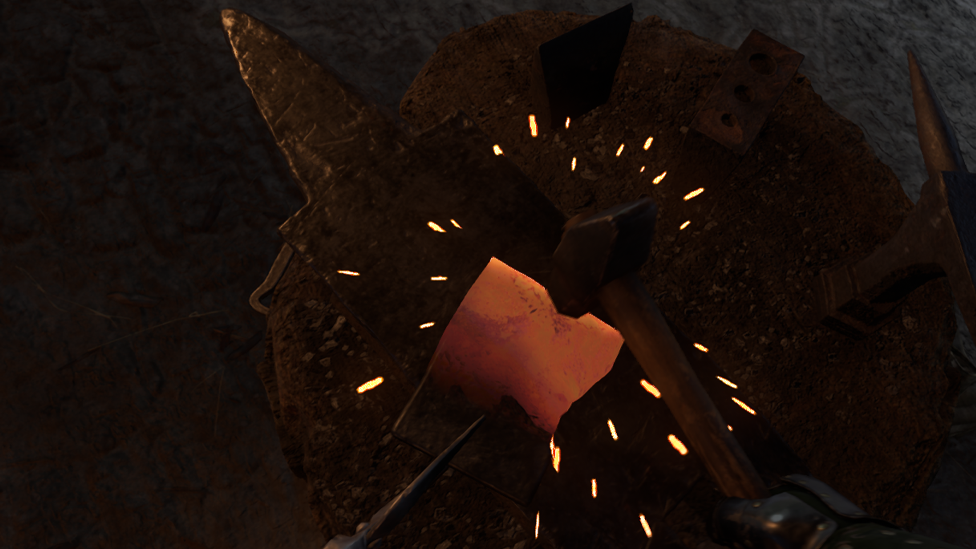
Hammering is the most difficult step because players need to time their hits precisely for it to work well.
- Use the Right Trigger or Left Mouse Button to strike the metal.
- The Left Stick or Mouse can be used to maneuver the piece in order to hit different points.
- Sparks are a sign that a hit was well-placed.
- Rotate the piece using X, Square, or F after striking one side.
- Heat the metal again in the forge if it has cooled down before continuing.
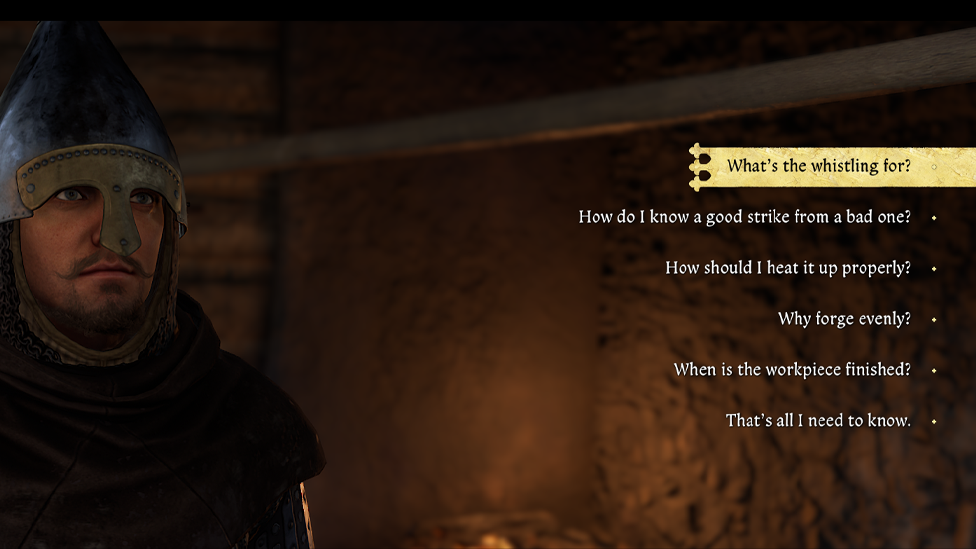
There should be good rhythm to make the end result better. Henry hums a song when the work is being done well.
- Quenching and Finishing
Once Henry is satisfied with his work, he will automatically:
- Return to the forge for a final heating. -Quench the heated metal in a water pail, completing the process.
Weapon Quality Tiers in KCD2
Henry's weapons have three levels of quality, which determines the damage they can cause and their selling value.
- Higher-tier weapons are manufactured through meticulous hammering and correct technique.
- Level of Craftsmanship skill also determines the final product.
Best Perks for Blacksmithing in KCD2
Henry's Craftsmanship skill regulates several activities, including washing clothes, repairing equipment, sharpening equipment, and weapon forging. Players can develop this skill by:
- Regularly practicing blacksmithing.
- Tipping a blacksmith for professional advice.
- Reading Craftsmanship books. The following Craftsmanship Perks enhance blacksmithing:
- Hardened Steel (Level 10) – Forged weapons take 20% less damage.
- Locksmith (Level 12) – Increases Thievery skill by 3 and allows players to craft more lockpicks.
- Martin's Secret (Level 16) – Unlocks the highest quality weapons, which cannot be found anywhere else.
Scalacube – A Reliable Server Hosting Solution
Scalacube offers the best option for server hosting for your Kingdom Come: Deliverance 2 experience. With Scalacube, you get fast, reliable, and affordable game servers so you can enjoy gaming without the fear of being hacked or logged out of your server. While other providers require you to pay for subdomains, Scalacube offers them for free.
FAQs
Can I forge legendary weapons in Kingdom Come: Deliverance 2?
Yes, some weapons are unique and need rare materials to be forged. Others can only be unlocked when you complete quests.
How do I get better at blacksmithing?
You can get better at blacksmithing by playing the game regularly, using high-quality materials and by learning advanced recipes. You can also improve your craft by upgrading your perks.
Where can I sell crafted weapons for the best price?
The best option if you want to sell your weapons is to sell to blacksmiths as you can get better prices. Some merchants might also give you better deals, but it depends on your negotiation skills and reputation.
Conclusion
Blacksmithing in Kingdom Come: Deliverance 2 is a highly useful skill that is well worth the payoff. With it, you can craft weapons and repair equipment. Not only that, you can also make a profit by selling items that you’ve forged. It takes time to master but with practice, you can learn to create powerful gear to help you in your journey and improve your overall experience.